Monday, April 22, 2013

“R” is for Recycling

Plastic Bags are not indigenous the Pacific Ocean Norbert Wu-Minden PicturesRecycling has become a way of life in many countries of the world. We recycle bottles – both plastic as well as glass – paper, cardboard, aluminum cans, by taking them to established recycling centers. We even recycle clothing, furniture, books and other useful items, by donating them to charities such as Good Will or the Salvation Army or, in the case of clothing, passing them down through siblings.

Unfortunately, not everything that could be recycled is, for various reasons. Sometimes it’s a case of lack of thought or caring, laziness, or perhaps even not having an accessible recycling plant. In this case, many times, non-biodegradable products are left wherever they fall. A couple of weeks ago, I went to the local shopping mall; there is a wooded area just before the area that, I was appalled to note, had become a depository for vacant flying bags, that hung – waving in the wind, from the branches.

Unfortunately, the practice isn’t limited just to woody areas. For years the news has referred to accumulations of plastic refuse found in rivers, lakes, oceanshaitian_coast plastic pollution and seas, but in the last few years, news of a gigantic “garbage patch” or “plastic soup” floating in the Pacific Ocean has come to light. Although references to Giant Ocean-Trash Vortex National Geographic October 28 2010a solid island of plastic that could be walked on is an exaggeration, the fact remains that the patch truly exists. The problem of the patch is not just esthetic, but is also a danger to human, animal and plant life. Thousands of sea animals and birds die each year as a result of ocean pollution and ingestion of plastic. Clumps of plastic garbage block waterways, sea turtles mistake floating plastic bags for jellyfish (which are a large part of their diet), animals become entwined in floating debris. Another problem is that there are a large number of invasive creatures are able to “hitch-hike” on the plastic floating on the ocean’s surface, creating an imbalance in the ecosystem. 

Part of the garbage patch problem is caused by the unavailability of plastic bag recycling centers. It’s true that we can avoid bringing new bags into circulation by reusing the same bags over and over until they wear out and then use them as trash bags. However, this still puts those bags into the environment. And some of those bags are so thin that stores use two bags to give them more strength, which actually doubles the amount of bags in circulation. What, then, can be done to eliminate the problem of plastic bags?

Several states have tried putting into act a law prohibiting the use of plastic bags. The latest in the list is the Big Island of Hawaii. With a large part of its income deriving from its beautiful coastline, Hawaii can ill-afford with plastic-locked beaches. One response to not using plastic bags is to use paper bags. However, as the site save the plastic bag mentions, there are at least two very good reasons for using plastic bags rather than paper bags. The first is Torn paper bagthat plastic bags are much stronger; paper bags are easily split, especially if they should become wet. The other would be in distinct conflict with plastic bag pollution: saving trees.

My mother spoke of a solution that she had heard of, and which I agree is a rather fun way of recycling plastic bags: cutting the plastic bags into strips and then using the strips to crochet different reusable, water-proof items. Cutting the strips is time consuming, especially when you have a LOT of bags Winking smile, like I do. I’m presently working on making strips, but I have also started crocheting a rug for the bathroom floor, but have plans to make a large, extra-strong shopping bag, and maybe even a laundry bag for carrying to the Laundromat. One group of people created a beautiful “mosaic” out of bags fished from the ocean, to remind people to care for the environment.

Plastic and glass bottles can usually be recycled, but those quart and gallon milk bottles can also be used for storing dry legumes or rice. Glass bottles withLaguna Gyre-Art piece from plastic bags Virginia Fleck interesting shapes could also be implemented in making interesting vases or artwork. Use your imagination, and you’d be surprised just how fun recycling can be. And just think, we can save the oceans and the trees, with a tiny bit of inventiveness, good sense and good will.


Sources:

Friday, April 19, 2013

“Q” is for Quilting

The following is a work of fiction. Sort-of.

The quilter riffled through the endless boxes of swatches, searching for the perfect pieces that would enable the quilter to make the most beautiful quilt ever made. So many colors, so many shades, so many patterns. Which shape for each color? The greens, the browns, the blues, reds and yellows, stripes, polka dots and flowers, with triangles, squares, diamonds and rectangles. So many choices to be made. The long process involved placing each swatch next to another, switching them around until each color fit in softly with the next.

Once the colors had been chosen – ruby-red, grass green, sunny yellows, dark, velvety blues and rich browns – and the shapes for each color decided, the quilter took took the scissors in hand and carefully cut around the templates, making sure the number of pieces matched the required amount. Hundreds of colors, thousands of pieces, each piece, each color essential to the whole, without which the quilt would be incomplete.

In and out, in and out, the quilter moved the needle with an even rhythm as the quilt came together with invisible stitches. Cutting the last thread, the quilter breathed a deep sigh, stood up and shook out the wrinkles and watched as his masterpiece spread to its full length. He stood and stretched out his tired arms and pronounced “It is good.”

100_0463100_0464

100_0468100_0467

“P” is for Pompeii

3601126_com_vesuvius2_zoomThe Roman city of Pompeii, located at the foot of the Volcano, Mt. Vesuvius, near the coast of the Bay of Naples, was destroyed, along with the cities of Herculaneum and Stabiae, by an unexpected, violent eruption of the volcano in the year 79 AD. The cities were buried by ashes and pumice stone caused by the eruption and then covered by layer upon layer of soil until it was rediscovered in 1748 during excavations that have continued until the present day. The excavations present reliable insight into the daily life of Pompeii and Rome in 79 AD.

Pompeii in its Heyday

Pompeii was founded during the 7th century BC by a central Italian people, the Oscans, but became a Roman colony in 80 BC when it was overcome by Sulla’s army. Because of its location, the city held an important position in the Roman Empire, both as a port city as well as a resort town. The prosperity of the city was also due to the high fertility of the soil, which made it ideal for agricultural pursuits.

Excavations have unearthed a trading company, jars full of wine, “Laundromats”, and many other professional buildings. Graffiti provides us with street dialects based on Latin. Pompeii had undergone extensive restructuration after being annexed to Rome, including the addition of a gymnasium, complete with centralized swimming pool; an amphitheater and an aqueduct that provided water for 25 street fountains, at least 4 public baths and a number of private homes.

It is presumed that there were approximately 20,000 citizens at the time of the eruption, gymnasium and amphitheater were discovered, along with two theaters, a large food market, a mill, a Thermopolium, and a number of small restaurants. A rather large hotel (1000 sq. meters) was found on the outskirts of the city.

It appears, from artifacts found during the excavations that on the day of August 24, 79 AD the people of Pompeii were going about their daily business much the same as usual. Half-eaten meals have been found in the homes, the local bakery had 81 loaves of bread still in the oven, recipe books were found open in kitchens and restaurants, people were found in bedrooms… Political graffiti found on walls show that the people were interested in local politics; local gossip was also to be found scribbled on the city walls and even in bathrooms, much like today.

Pliny the Younger, an eye-witness to the destruction of Pompeii, wrote a series of letters after the incident, indicating that the inhabitants of Pompeii knew that something was wrong, although at the time most had no idea of how dangerous the situation was. Pliny’s mother had seen a giant mushroom-shaped cloud over the mountain and had said that she was very worried about eruption. The citizens of Pompeii had no experience with volcanic eruptions, and therefore had no idea that they should get out of the city quickly. When they finally realized the seriousness of the situation, it was already too late to escape.

A group of us went to see the Pompeii exhibit at the Discovery Museum in Manhattan on August 22, 2011. Although flash photography was not allowed, we were able to take videos, which do not require flash. Here are some of the clips I was able to take from the video I took. 

3601166_com_pompei_remains_13601154_com_pompei_23601130_com_th_pompei3dog3601162_com_pompei_pig3601158_com_pompei_graveyard


Sources:

Wednesday, April 17, 2013

“O” is for Obtuse

800px-Glock_19_(9mm),_Generation_3I have a feeling that I must be terribly obtuse; I can’t seem to understand why a simple bill that could help protect the innocent was not given a thumbs up. Today, the Senate was voting on legislation that, if passed, would have required a background check for people buying guns. Approximately 90% of American citizens are in favor of this bill, but unfortunately the majority of Americans are not actively represented by their so-called representatives. These senators are more worried about losing an A+ rating from the NRA than listening to their constituents.

I am so obtuse that I fail to understand why people who have nothing to hide are so afraid of having a background check when buying a gun. Yes, the Second Amendment to the Constitution of the United States of America states: “A well regulated Militia, being necessary to the security of a free State, the right of the people to keep and bear Arms, shall not be infringed upon.”* I guess I’m really obtuse, because to me, what is written here is that the people have the right to bear arms if they are part of “A well regulated Militia, being necessary to the security of a free State…”

Again, my obtuseness is showing, because I fail to understand why people think it’s okay to have a background check to get a loan, to get a driver’s license, to apply for a job or even buy a house or car, but it’s a horrible, dreadful thing to have to undergo a background check to buy a gun. Heck! I even have to go through a background check to be able to buy cough syrup, just because it says it DOESN’T contain a certain ingredient.

I guess I truly am obtuse, because I cannot understand why people hold their “right” to have a gun in higher respect than they do the right of people to “life, liberty and the pursuit of happiness”** and the “inalienable rights of man”. I am sooooo obtuse. Or… am I?

*http://constitutionus.com/

**http://www.archives.gov/exhibits/charters/declaration_transcript.html

Tuesday, April 16, 2013

“N” is for Nerve

I’ll tell you: some people just have a lot of nerve. Last Thursday, I had a doctor’s appointment scheduled for 7:00 p.m. I left my house at 5:45 so that I could get there on time, maybe even a little early; in fact I got there at 6:55, but the doctor had already left. WHAT?!!!!!! This appointment had been set by the doctor himself on December 17, 2012. Of course, I didn’t know he had already left until almost 7:30, because no one was manning the desk until that time. When the assistant finally showed up, she informed me of the good news. She very kindly gave me a Metrocard for the bus as well as an appointment for the next morning. Since I was there for the appointment at the appointed time, she set the time for what was convenient for me; I chose 10:00 a.m. She also wrote a note saying that I HAD GONE TO THE APPOINTMENT.

I got up early so I could get everything done I needed to before I left, then left the house at 8:45. Fortunately, I was lucky enough to get to both bus stops just in time to catch each respective bus. Ten minutes before arriving at the clinic, I received a phone call – from home; my roommate told me that the doctor had called to let me know that he would not be in his office that day. WHAT?!!!!!! Nice time to let me know—after I had already left. The bad thing was that I REALLY needed to see the doctor; I had run out of my meds, and I needed him to sign and fax a paper to my insurance company so that I could have my insulin paid for. I really needed this. NOT.

I went up to the doctor’s office anyway, and since I needed to renew the prescriptions they said they’d put me with a different doctor, who’d see me ASAP. Right. Keep in mind that I got there at 9:50. At 12:30, they told me I’d be seen at 1:00. Well, to make a very long story short, I got out of there at 4:00, with a new appointment for June 21 (I’m going again Thursday, because I still need to have those papers signed).

All over, right? WRONG! And talk about nerve! Today, I got a letter from the clinic saying that I MISSED THE APPOINTMENT! HUH?!!!!! ME? That takes a lot of nerve, saying that I missed the appointment and that I have to set up a new one (which would probably be in October).

As I said, some people have a lot of nerve!

“M” is for Museum of Natural History

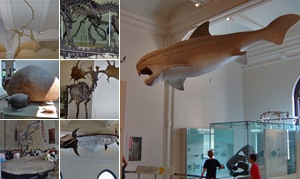
HPIM0687Imagine walking through a primordial forest and coming face to face with a Mammoth or a ferocious T-Rex. What would you do? Would you run or would you stop and have your friends take your picture with them? Well, that’s what happened to me, along with my friends Russ and Jody, when we went to the Museum of Natural History in New York City on August 17, 2012. And although some of the exhibits were rather frightening, we stood our ground and took lots of pictures.

The American Museum of Natural History was founded in 1869, as a result of the dream of naturalist Dr. Albert S. Bickmore. Before being transferred to its present location facing Central Park, it was housed in the Arsenal Building in the Park itself. The Museum is one of the top museums in the world and hosts more than 5 million visitors per year that visit its 46 permanent exhibition halls as well as special exhibitions that are there on a temporary basis.

Prehistoric Eras

As the three of us entered the museum we came face to face with the skeleton of a mother Barosaurus in the act of defending her young from the attack of an Allosaurus (see first 2 photos in prehistoric photo album). We then entered the prehistoric hall and were privileged to see a wide variety  of dinosaur skeletons as well as other prehistoric creatures. There is also a photo of myself with a Mammoth, which was taken to prove that there was indeed something larger than myself. Winking smile 

It was particularly interesting for us to note that although many animals of that period were much larger than their modern day descendants, there were also many that were very small in comparison. Among the prehistoric mammals we found was the first known “horse” or eohippus. I first read about the eohippus when I was in the first grade, and had always wanted to see one. In a way, it was the answer to a life-long dream. There were mammoths, mastodons, armadillos (both gigantic and miniscule) and many other types of animals.

I think that one of the most interesting parts of the section was the “fish and fowl” section. Looking at those flying dinosaurs was amazing. Pterodactyls, and other “birds” flew above the visitors. I particularly enjoyed seeing the prehistoric frog (mastadonsaurus giganteus) – whoever has read my book knows of my love of frogs and toads. Open-mouthed smile There were even prehistoric shark jaws that would have made a modern day great white shark jealous.
African Mammals

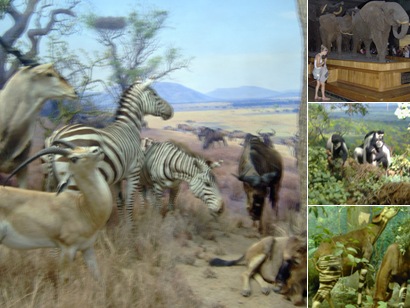
Perhaps the most beautiful of the exhibitions that we saw that day was the African Mammals Hall. The animals on exhibit are the real deal, prepared by taxidermists so good that you would think that they were alive. But the truly amazing part of the exhibitions are the dioramas behind the animals: they are so realistic that you almost forget that you are inside a building instead of on the African Savannah.

We also spent a few minutes inside the reptile and amphibian house, although I seemed to be the only one with any real interest. Among other things there is also a giant Galapagos tortoise.

There are so many things to see that it is impossible to see everything in one day; it would more realistically take 3-4 days, just for the regular exhibits. Extra days would be necessary for the special exhibitions, which are very interesting, too. Although we actually saw only three exhibits while there, we most certainly plan on going back to see others, hopefully very soon. The Astronomy Hall, the Sea exhibits (including a series of videos) the New York State Natural History and others are calling to me. I’ll let you know when we go.

Sunday, April 14, 2013

“L” is for Linguini agli Asparagi

100_0303Ingredients for 4 persons:

  • 1lb. linguini pasta (I suggest Barilla)
  • 1 bunch of fresh asparagus
  • 1 small onion, chopped
  • 5 Tbs. butter
  • 4 qt. water + enough to cover the asparagus
  • Salt to taste

Procedure:

Put the 4 qt. water in a large saucepan and bring to a boil; add linguini and salt to taste. Follow the instructions on the package, because each brand has a different timing. Stir from time to time to avoid sticking. Drain when cooked.

In the meantime, break the asparagus in 1 inch segments, until the woody end is reached*. Rinse and place in a large skillet, together with the chopped onions. Pour in water to cover; bring to a boil, lower heat and simmer until no water remains.

Add butter and sautée until butter is completely melted. Add cooked linguini, heat and stir, sprinkle with parmesan cheese and serve.

*Suggestion: Many people use a knife to cut the asparagus. I would suggest snapping them manually, starting at the tip; when they no longer snap easily, the woody section has been reached.